

Refreshed by Sydney Smith Hamrick, MLIS (University of North Carolina Greensboro) April 2026
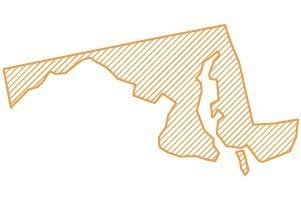
Maryland is home to one school that provides a library science program. Though it is the only program available in the state, it is currently ranked as the third best library science program in America. Despite having one library science program, Maryland offers great opportunities for prospective librarians who want to find work in the state.
There are over 400 library facilities serving Maryland’s citizens. This figure includes public, K-12 school, and academic libraries. There are lots of students and citizens using libraries there, and they need qualified librarians to staff them and provide services.
Throughout this article, we’ll discuss the educational and professional options prospective library students have in Maryland, including academic programs, salary potential, and requirements for librarians to work in the state.
At a Glance (TL;DR)
- ALA-accredited MLIS Programs: 1
- Total LIS-related programs: 1
- Median Librarian Salary: $65,200/year
- Typical MLIS Length: 2 years
- Online Availability: 100%
- Major Library Systems: 24 (23 county systems and one city system in Baltimore)
How to Become a Librarian in Maryland
- Earn a bachelor’s degree in any field or subject area. MLIS programs welcome applicants from a plethora of educational and professional backgrounds, making the library and information science space diverse and knowledgeable.
- Complete an ALA-accredited MLIS program. Holding a degree from an ALA-accredited program isn’t always a firm hiring requirement, but many public, school, and academic library systems prefer candidates who have one. Before choosing a school for your MLIS, research the hiring preferences for different library systems.
- Gain practical experience. Many MLIS programs require students to complete internships, practicums, or independent studies before graduation. During this time, students can gain real-world library experience before employment. In addition, students can also find positions in libraries that do not require a completed MLIS degree to gain valuable work experience – for example, paraprofessional roles.
- If you are planning to work in K-12 school libraries, complete the appropriate additional requirements to become licensed to teach and lead a school library. In Maryland, this means following the appropriate track to ensure you meet a strict set of educational requirements:
- Hold a master’s (or higher) degree, complete a Maryland-approved program ending in media specialist licensure in Maryland.
- Hold a master’s (or higher) degree, complete an approved program ending in media specialist licensure in another state that is comparable to Maryland’s.
- A master’s (or higher) degree, a valid professional library media license from another state, and three years of satisfactory full-time experience as a library media specialist.
- Hold a bachelor’s or higher degree, complete a school library media practicum, have one year of full-time teaching experience (or 1 year of full-time school library media-related experience), and complete 36 semester hours of post-baccalaureate credit with 15 semester hours completed at one institution and a minimum of 24 semester hours of graduate-level credit in specific coursework areas.
- Begin applying for roles! With a completed MLIS degree, you are ready to start searching for your first post-education position.
The Only MLIS Program in Maryland
Maryland has one primary in-state MLIS option. Students who want more formats or specializations may need to look outside the state.
Is This Program Right For You
- Best for students who want an in-state option
- Best for students comfortable with one main in-state choice
- Best for students who want online or hybrid flexibility
When to Consider an Out-Of-State Program
- You want more than one school to compare
- You want a specialization not strongly represented locally
- You want a lower tuition option
- You want a different delivery model or admissions structure
Typical MLIS Courses
Most MLIS programs in Maryland follow a similar curriculum structure built around core competencies in librarianship and information science.
Core Courses
- Foundations for Librarians & Information Professionals
- Serving Informational Needs
- Achieving Organizational Excellence
- Creating Information Infrastructures
Electives and Specializations
Students can customize their degree with courses such as:
- Archives & Digital Curation
- Youth Experience (YX)
- Intelligence & Analytics
- Diversity & Inclusion
- School Library Certification
- Legal Informatics
- Dual Degrees: History & Library Science
- Certificate: Museum Scholarship & Material Culture
Capstone or Practicum
Many programs conclude with:
- A capstone project
- A professional portfolio
- A field-based internship
These experiences allow students to apply theory to real-world information environments.
What Hiring Managers Look For
When you finish your library science degree, you want to ensure you’ve built the types of skills and competencies hiring managers want to see in their employees.
Core Skills:
- Customer service and community engagement
- Being able to work through customer service complaints calmly and effectively
- Assisting people with everything from printing, to finding specific titles, research, and beyond
- Creating an inclusive and welcoming environment
- Technology and digital literacy
- Basic IT troubleshooting (working with smartphones, un-jamming printers, etc.)
- Familiarity with databases and digital resources
- Teaching patrons how to use tech, such as computers, tablets, and eReaders
- Information Literacy and research skills
- Evaluating credible sources
- Navigating catalogs and databases
- Supporting everything from in-depth research queries to casual questions
- Communication
- Writing emails, staff guides, instructions for the public
- Public speaking in front of groups (library tours, staff meetings, programs, etc.)
- Clear verbal explanations with patrons
- Adaptability and problem-solving
- Helping someone with an unusual or difficult question
- Handling a patron’s behavior issue
- Mediating a customer service problem
- Adjusting to changes at work, such as shifting policies or staffing changes
- Equity, Diversity, and Inclusion
- Considering all patrons who walk through the doors
- Building cultural competency
- Being aware of accessibility needs
- Project Management
- Managing collections and programs
- Meeting deadlines and coordinating with team members
- Data Awareness
- Using data to track results and make adjustments to improve services
- Tracking program attendance, circulation statistics, and usage reports
What Stands Out
- Internships, practicum experiences, or other real library work experiences
- Professional portfolio work
- Research papers or other published work in the library and information science field
Credentials
- MLIS (preferably from an ALA-accredited program)
- Teaching licensure (for K-12 school librarians)
- Specialized certifications for archivists, museum curators, etc.
- Professional Public Librarian Certification (issued through the Maryland State Department of Education)
Sources
- Maryland Library Association
- American Library Association
- Maryland Association of School Librarians
- Maryland Association of Public Library Administrators
Program Listings
Maryland is home to one Master of Library and Information Science program, but it is mighty. The University of Maryland’s College of Information Studies offers a robust degree program with multiple concentrations and pathways available. Not only does the University of Maryland offer a fully-online and hybrid in-person attendance option, but the average student can finish the degree in about two years.
University of Maryland

Program:
Master of Library and Information Science
Program Overview: This program offers students the same Master of Library Science degree with the option to customize with a specialized focus. With online and in-person attendance options, this program is suitable for students looking for traditional on-campus experiences as well as busy students who need more flexibility.
Key Highlights:
- This MLIS program is the only one offered in Maryland.
- This MLIS can be completed in about two years.
- The cost for this MLIS program is average when compared to other similar programs across the nation – around $37,000 for in-state students and $72,000 for out-of-state students.
- Students in this program have the option to participate in internships, work studies, and other hands-on library experiences.
- The University of Maryland has a dual degree option where MLIS students can also earn a master’s degree in history.
- In-person students also have hybrid attendance options, meaning they can attend some classes virtually if needed.
Additional Considerations:
- Students looking for multiple in-state choices will need to compare out-of-state or online alternatives.
- Out-of-state tuition may be significantly higher than in-state tuition
- Applicants should verify current format and admissions requirements before applying
Best Fit For: Students who want a robust MLIS education with the option to specialize in a specific area.
Accreditation status: This program is ALA-accredited.
University of Maryland MLIS Program Snapshot
| Field | Details |
|---|---|
| School Name | University of Maryland |
| Program Name | Master of Library and Information Science |
| Format | Online and in-person/hybrid options |
| ALA Accredited | Yes |
| GRE Required | No |
| Tuition Range | In-state total ≈ $37,000Out-of-state total ≈ $72,000 |
| Typical Length | About 2 years |
| Best Fit For | Students seeking a flexible in-state MLIS |
| As of Date | April 2026 |
Tuition can vary based on course load and residency status, so applicants should confirm current costs directly with the program.
Salary and Job Outlooks for Librarians in Maryland
- Median Salary (U.S.): $64,329 (around $30.92 per hour)
- Median Salary (Maryland): $65,200
- Growth projections: The employment of librarians is expected to grow by 2% between 2024 and 2034. While this growth rate is slower than average, around 13,500 openings are projected each year – this accounts for retirements, career changes, new/restructured positions, and other openings.
Where Librarians Work in Maryland
Graduates of the MLIS program in Maryland work across a wide range of settings, reflecting the evolving role of information professionals.
Common Work Environments
- Public and regional libraries (e.g., St. Mary’s Public Library system, Eastern Shore Regional Library)
- Colleges and universities
- K-12 school systems
- Museums and archives
- Government agencies
Emerging Roles
In addition to traditional librarian positions, MLIS graduates may work in:
- Data management and information architecture
- Nonprofit organizations
- Corporate libraries and archives
- Law libraries and legal offices
- Digital archives and preservation
- User experience (UX) and information design
- Knowledge management and research analysis
Library science graduates are increasingly employed in roles that extend beyond libraries into broader information- and data-focused industries.
Career and Licensure Requirements
Public and Academic Librarians
- Typically, these positions require a completed MLIS. Some institutions want to see applicants with an ALA-accredited MLIS degree, but some may not have a preference.
- No universal license is required.
School Librarians
- School librarians are also teachers, so they must have a valid teaching license for the state of Maryland in hand to qualify for positions.
- On top of the teaching license, an endorsement to be a school librarian/media coordinator is also required. Typically, this endorsement is achieved upon completing an MLIS degree.
Scholarships and Financial Aid
There are Maryland-specific scholarship and financial aid opportunities for MLIS students.
- Maryland Library Association: Offers educational and conference grants up to $500 that can be used to pay for professional development programs or MLIS courses.
- Nettie B. Taylor Library Leadership Scholarship: An award of $1,250 provided by the Citizens for Maryland Libraries. This money can be used to pay for professional development and leadership training and is ideal for early-career librarians or library students already employed in libraries.
- Charlie Robinson Memorial Scholarship: This scholarship is designed for Maryland residents pursuing an MLIS degree. The award amount varies from year to year.
- University of Maryland MLIS Scholarships: These scholarships are available to students already enrolled in this MLIS program. They are merit-based and award amounts can vary from year to year.
Professional Associations
Librarians and library workers in Maryland have a variety of state and regional professional associations for networking.
- Maryland Library Association: This is the largest professional association for librarians in Maryland. It offers scholarship opportunities, conferences, networking, professional development, advocacy, and more to its members.
- Maryland Association of School Librarians: This association exists to support Maryland’s K-12 school librarians through advocacy, professional development, continuing education opportunities, and school library instruction standard development.
- Maryland Association of Public Library Administrators: This association coordinates leadership across Maryland’s county library systems. They work together to pool resources, strategize funding, and plan policies.
- Maryland State Library Agency: While this is not a membership association, the group does important work for all libraries across Maryland. It oversees certification standards for all librarians, administers library funding programs, and works closely with the MLA and MAPLA to develop policies.
Conclusion
While Maryland doesn’t offer as many MLIS program options as other states, its one existing program at the University of Maryland is strong, diverse, and customizable, making it a great choice for students.
As the role of librarians continues to evolve, expanding into digital literacy, data management, and community engagement, earning an MLIS can open doors across public, academic, and specialized environments.
The next step is to explore program websites, connect with admissions teams, and determine which path aligns best with your professional and academic goals.
FAQs
Do You Need a Master’s Degree to Be a Librarian in Maryland?
Some library systems will require applicants to hold a master’s degree in library and information science to be qualified for a librarian position, and others will allow librarians to enter the field with adequate supplementary education and/or experience. Before applying, read through job postings carefully to determine what education or certifications you need.
How Long Does it Take to Earn an MLIS?
Typically, a student can earn their MLIS within two to three years. This can depend on various factors, such as:
- Whether the student takes classes full-time or part-time
- Whether the student fails a class or needs to withdraw from a course and retake it later
- Other schedule obligations that may cause a student to slow down their coursework, such as balancing a job or family responsibilities with school
While two to three years is typical, some students can earn their MLIS more quickly or more slowly. It is largely dependent on the student’s specific circumstances and needs.
Are online MLIS degree programs available in Maryland?
Yes! Maryland’s one MLIS program at the University of Maryland does offer a fully-online degree program option.
What Jobs Can You Get With a Library Science Degree in Maryland?
Maryland offers a variety of job opportunities for people with MLIS degrees, such as…
- Public librarian
- K-12 school librarian
- Academic librarian
- Library director
- Law librarian
- Digital archivist
- Data manager
- Cataloger
- User experience (UX) design for libraries
- Medical/corporate archivist
Resources
- Maryland Library Association
- Maryland State Library Agency
- Maryland Association of Public Library Administrators